
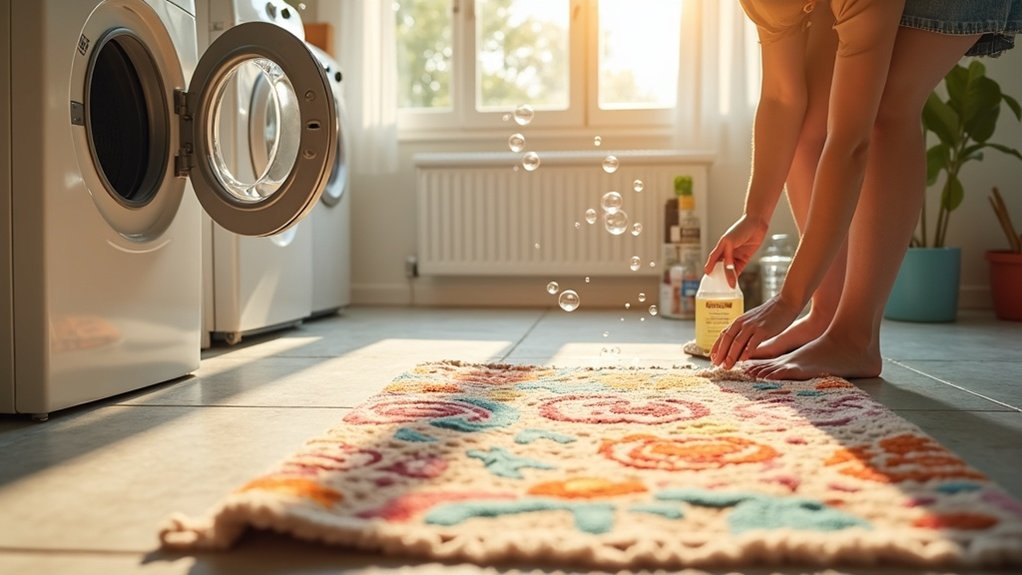
To wash area rugs at home, start by checking the care label for specific cleaning instructions. Gather your tools: a bucket, mild dish soap, soft bristle brush, and vacuum. Vacuum the rug, then mix a cleaning solution and test it in an inconspicuous area. Clean in small sections, rinsing thoroughly with a garden hose until the water runs clear. Remember to dry it properly and establish a regular cleaning routine for maintenance—there’s more to explore on caring for your rugs!
Key Takeaways
- Check the rug’s care label for specific cleaning instructions based on its material to avoid damage.
- Gather cleaning tools, including a vacuum, soft bristle brush, bucket, and mild dish soap.
- Vacuum the rug thoroughly to remove dust and debris before washing.
- Clean the rug in small sections with a sponge and rinse with a garden hose until clear.
- Deep clean rugs at least once a year and maintain a regular vacuuming schedule.
Know When It’s Time to Clean
When it comes to keeping your area rugs looking their best, knowing when to clean them is essential. If you notice a cloud of dust during regular vacuuming, it’s time to deep clean.
Darker or uneven patches indicate dirt accumulation, while rough, matted spots and visible residue suggest your rug needs attention. Unpleasant odors are another clear sign that it requires thorough cleaning.
For ideal rug maintenance, aim for deep cleaning at least once a year. By addressing these issues promptly, you can prevent dust mites and maintain a fresh, inviting environment while ensuring your rugs serve others well.
Check Rug Label
Before diving into the cleaning process, always check the care label on your area rug for specific cleaning instructions. This label guides you on the best methods to use based on the rug’s material.
Most rugs can be machine washable or hand cleaned, but delicate fabrics like wool or silk may require professional cleaning. Following these cleaning instructions is vital to prevent damage, such as shrinking or color fading, and to maintain the integrity of your rug.
If you own an antique or vintage piece, consulting a professional cleaner guarantees proper care and preservation for years to come.
Gather Your Tools
With the care instructions in hand, it’s time to gather your tools for washing your area rug effectively.
You’ll need a few essential items to guarantee a thorough clean:
- Cleaning Supplies: Prepare a bucket filled with your chosen cleaning solution, like rug shampoo, and have white towels and a soft bristle brush ready for spot cleaning.
- Rug Cleaning Tools: Grab a vacuum cleaner and a rug beater for pre-cleaning, along with a garden hose and squeegee for rinsing.
- Workspace Protection: Lay down a tarp to protect your work area and prevent dirt from contaminating the rug again.
Wash & Rinse Rug
To effectively wash your area rug, start by preparing a cleaning solution that combines mild dish soap with water, following any specific instructions from the rug’s care label.
Begin by mixing a gentle dish soap with water, adhering to your rug’s care instructions for optimal cleaning.
Lay a tarp on a flat surface to prevent picking up dirt and debris during the process. Test the cleaning solution on a small, inconspicuous area first.
Clean the rug in small sections using a sponge, gently scrubbing to remove dirt and stains from the rug fibers.
Once you’ve cleaned the entire surface, rinse the rug with a garden hose until the water runs clear, ensuring all soap residue is removed.
Rinse & Dry Rug
Once you’ve finished washing your area rug, rinsing it thoroughly is essential to remove all traces of the cleaning solution.
Follow these steps to effectively rinse and dry your rug:
- Rinse the rug with a hose until the water runs clear, ensuring no residue remains.
- Use a squeegee to remove excess water, working in the direction of the fibers.
- Place the rug in an elevated area to allow airflow on both sides, rotating it periodically to prevent moisture retention.
Make sure your rug is completely dry before placing it back to avoid mold and mildew growth.
Area Rug Maintenance Tips
To keep your area rugs looking their best, establish a regular vacuuming schedule, aiming for at least once a week.
When spills happen, tackle stains promptly with a mild detergent and cold water to prevent them from setting in.
Don’t forget to deep clean your rugs seasonally to remove accumulated dirt and maintain their appearance.
Regular Vacuuming Schedule
While it might be easy to overlook, establishing a regular vacuuming schedule is essential for maintaining the beauty and longevity of your area rugs.
To effectively keep them clean, follow these tips:
- Vacuum at least once a week to prevent dirt accumulation and maintain their appearance.
- Use a suction-only setting on your vacuum to avoid pulling yarns and damaging fibers.
- Pay special attention to high-traffic areas and spots where pets lie for thorough cleaning.
Spot Clean Stains Promptly
When a spill happens, acting quickly can make all the difference in preserving your area rug’s appearance.
Start by blotting the stain with a clean, dry cloth to absorb excess liquid, preventing it from setting into the fibers.
Mix mild dish soap and water for spot cleaning, using a soft-bristled brush or sponge to gently scrub the area.
Always test any cleaning solution on a hidden spot first to ascertain no discoloration occurs.
For stubborn stains, a carpet stain remover can be effective, just follow the manufacturer’s instructions.
Regularly vacuuming helps prevent dirt buildup, making spot cleaning easier.
Seasonal Deep Cleaning Routine
After you’ve taken care of any spills and stains, it’s time to focus on a seasonal deep cleaning routine to keep your area rug in top shape.
Follow these steps:
- Vacuum the rug thoroughly on both sides to remove loose dirt and allergens.
- Check the care label for specific cleaning instructions; different materials may need different methods.
- Use a cleaning solution of mild dish soap and warm water, and test it on a small area first to avoid damage.
After cleaning, verify the rug is completely dry by air drying it in a well-ventilated space to prevent mold growth and maintain its integrity.






