
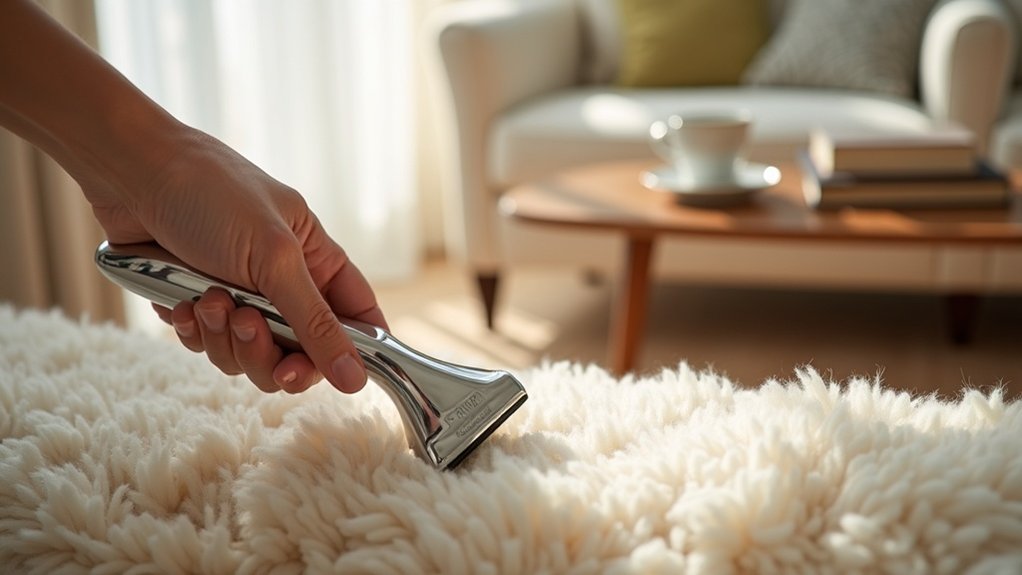
To remove pilling from your couch, start by gathering tools like a sharp razor or electric fabric shaver. Lightly press the device against the fabric in circular motions, testing on a hidden area first. For quick fixes, you can use packing tape to lift loose fibers. Regular vacuuming and rotating cushions help prevent future pilling. There’s a lot more you can do to keep your couch looking its best, so let’s explore some effective methods.
Key Takeaways
- Use a sharp razor or electric fabric shaver to carefully cut away pilling from the couch’s surface.
- Test any de-pilling method on a small, inconspicuous area to avoid damaging the fabric.
- For minor pilling, packing tape can lift loose fibers quickly and efficiently.
- Regularly vacuum the couch with an upholstery attachment to remove loose fibers and prevent future pilling.
- Rotate cushions monthly to promote even wear and reduce the likelihood of pilling.
Understanding Couch Pilling
Couch pilling can be a frustrating issue for many homeowners, but understanding it can help you tackle the problem effectively.
Pilling consists of small balls formed by loose fibers on your couch, typically appearing within the first 4-6 months of use. This occurs as new fabrics shed during regular wear and tear.
Pilling is the formation of small balls from loose fibers on your couch, often seen in the first few months of use.
Factors like fabric type, frequency of use, and the nature of fibers contribute considerably to pilling. While some pilling is normal, addressing it early can prolong your couch’s life and keep it looking great.
Regular maintenance can help manage pilling, ensuring your furniture stays inviting and comfortable.
Tools Required for Pilling Removal
When it comes to tackling pilling on your couch, having the right tools makes all the difference. Here are some essentials to help you restore your upholstered furniture:
| Tool | Purpose | Best Use |
|---|---|---|
| Sharp Razor | Cuts away pills | For a clean, precise removal |
| Electric Fabric Shaver | Quickly tackles large areas | For efficient de-pilling |
| Packing Tape | Lifts loose fibers | Quick fix for minor pilling |
| Upholstery Brush | Cleans up remnants | Final touch for a polished look |
| Fine-toothed Comb | Gentle on delicate fabrics | Careful pill removal |
With these tools, you’ll keep your fabric looking fresh!
Preparation for De-Pilling Your Couch
Before you start de-pilling your couch, it’s essential to gather all the necessary tools, like a sharp razor or fabric shaver.
Take a moment to assess the fabric type and its condition, as this will help you choose the right method for removing those pesky pills.
Gather Necessary Tools
To effectively tackle pilling on your couch, you’ll need the right tools at your disposal. Start with a new, sharp razor or a fabric shaver designed for upholstery fabrics to remove those pesky pills.
Keep packing tape handy; it’s great for lifting off loose fibers after shaving. An upholstery brush attachment for your vacuum will help clean up remaining debris.
For quick touch-ups, consider using a lint roller or brush to keep your couch looking fresh.
Finally, remember to clean your couch beforehand to guarantee a smoother de-pilling process.
Let’s get your couch looking its best!
Assess Fabric Condition
With your tools ready, it’s time to assess the fabric condition of your couch.
First, inspect your fabric sofa for pilling extent and any loose threads. Identify the fabric type, as different materials need tailored de-pilling methods.
Look for areas that may appear worn and tired, requiring special attention.
Verify your couch is clean and free of dirt, which can hinder effective pilling removal.
Finally, test any chosen de-pilling technique on a small, inconspicuous area first to guarantee safety and effectiveness.
This careful assessment will set you up for a successful de-pilling process.
Step-by-Step Guide to Using a Fabric De-Fuzzer
To get started with using a fabric de-fuzzer, you’ll first want to select the right tool for your couch, like the affordable Conair Fabric Defuzzer.
Once you’ve got your de-fuzzer, evaluating your fabric type and adjusting the blade height is essential to avoid any damage.
With the right technique and care, you can effectively remove those pesky fuzz balls and restore your couch’s appearance.
Selecting the Right De-Fuzzer
How do you choose the right de-fuzzer for your couch? Start by evaluating the fabric type—this helps you select the appropriate blade height setting, ensuring compatibility with the texture and thickness.
Once you’ve got the right de-fuzzer, turn it on and lightly press it against the fabric, moving in circular motions. Remember to test it on a hidden area first to avoid damaging your upholstery.
Use the de-fuzzer for just a few minutes at a time to prevent harm and maintain your furniture’s look. Finally, regularly clean its collection compartment for peak performance.
De-Fuzzing Technique and Tips
Once you’ve selected the right de-fuzzer for your couch, it’s time to put it to work. Start by evaluating the fabric type and adjust the blade height to prevent damage.
Pull the sofa cushions taut for effective de-fuzzing. Turn on the de-fuzzer and gently press it against the fabric, moving in circular motions to lift and remove pilling. Regularly check to verify you’re not cutting into the material.
After de-fuzzing, inspect the results; a revitalized fabric enhances your upholstered furniture’s appearance considerably. This de-fuzzing technique will help keep your couch looking its best for everyone to enjoy!
Alternative Methods for Removing Pilling
While pilling can be frustrating, several effective methods exist to restore your couch’s appearance without causing damage.
A lint brush or lint roller works wonders in lifting those pesky lint balls off the fabric. For a more hands-on approach, consider using a fabric comb or fabric shaver, which allows for precise de-pilling.
If you’re cautious, a blunt razor can also help, but test it on a hidden area first to prevent fabric damage.
Regularly brushing your couch can maintain its look and keep pilling at bay, ensuring your space remains inviting and comfortable for everyone.
Regular Maintenance to Prevent Future Pilling
To keep your couch looking fresh and minimize pilling, regular maintenance is essential.
Vacuum your couch weekly with an upholstery attachment to remove loose fibers that can lead to pilling. Remember to rotate cushions monthly for even wear and to reduce pilling in specific areas.
When shopping for new upholstery, keep in mind that performance fabrics, like Crypton, resist pilling effectively.
Consider performance fabrics, such as Crypton, when selecting upholstery for effective pilling resistance.
If you have pets, keep their nails trimmed to prevent snags that damage the fabric.
Consistently cleaning and caring for your couch can greatly extend its life and maintain its appearance.
When to Consider Professional Help
Even with regular maintenance, some situations call for professional help.
If you’re unsure about tackling pilling on your couch, consider these instances:
- Your couch is made from delicate fabrics like silk or cashmere; professional help can prevent fabric damage.
- Extensive pilling has greatly affected your couch’s appearance, and experts have the right tools for effective treatment.
- You’ve tried removing pilling at home but caused fabric damage instead; consulting a professional can avoid further deterioration.
For high-value or antique furniture, professionals guarantee the integrity of your piece while addressing pilling issues effectively.






