
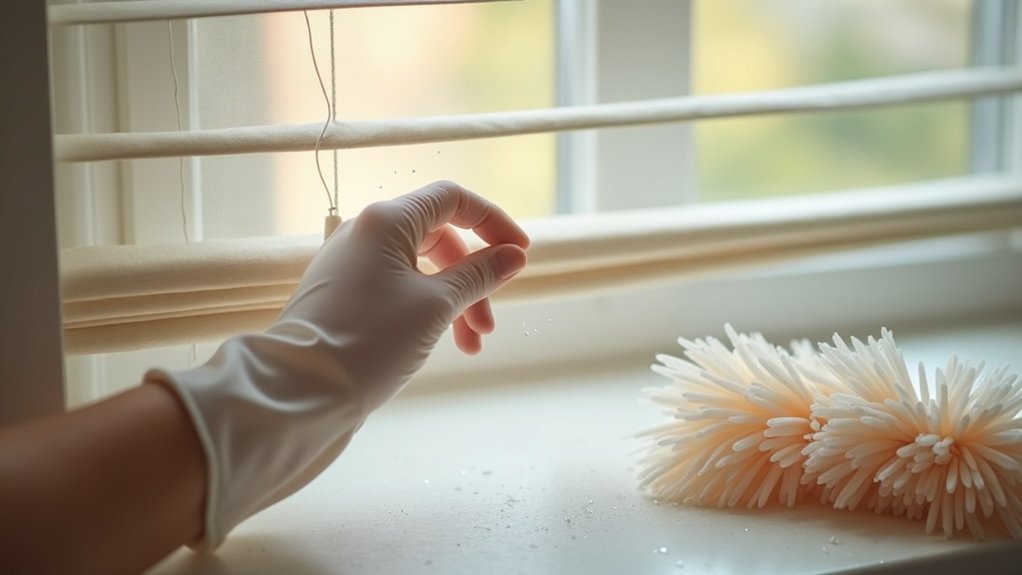
To remove dust from fabric blinds, start by regularly dusting with a microfiber cloth or feather duster, focusing on edges and corners. Vacuum monthly, using an upholstery brush to gently clean each slat. For stains, mix mild detergent with warm water, blot gently, then rinse with a clean cloth. Deep clean every 6 to 12 months by removing the blinds. With these tips, you’ll keep your fabric blinds looking fresh and beautiful—there’s more you can do to enhance their care!
Key Takeaways
- Use a microfiber cloth or feather duster to gently dust fabric blinds, focusing on edges and corners for thorough cleaning.
- Vacuum blinds monthly with an upholstery brush, starting from the top and working down each slat to effectively remove dust.
- For pleated and vertical blinds, dust regularly to prevent buildup due to their design, which can trap more dust.
- Spot clean stains with a mild detergent solution, blotting gently with a soft cloth instead of rubbing to avoid damage.
- Establish a routine maintenance schedule to ensure regular cleaning and prolong the lifespan of your fabric blinds.
Understanding Your Fabric Blinds
When it comes to maintaining your fabric blinds, understanding their unique characteristics is key. Different styles, like pleated or roller, require specific cleaning methods.
To keep them looking fresh, you need to identify the fabric type—polyester can handle more moisture than delicate fabrics like silk or linen. Always check the manufacturer’s instructions for guidelines tailored to your blinds; this helps you avoid damage.
Regular dusting and vacuuming are essential maintenance steps that prevent dust buildup and extend lifespan. By utilizing specific cleaning techniques suited for your fabric blinds, you’ll guarantee they stay beautiful and functional for years to come.
Regular Maintenance: Prevention Is Better Than Cure
To keep your fabric blinds looking great, establish a monthly cleaning routine that fits seamlessly into your schedule.
Regular dusting with a microfiber cloth or vacuuming with an upholstery brush can prevent dust buildup, especially for vertical blinds that trap more dirt.
Monthly Cleaning Routine
Establishing a monthly cleaning routine for your fabric blinds is essential to keep them looking fresh and extend their lifespan.
Start by using a microfiber cloth or feather duster to gently remove loose dust. For effective dusting, go from top to bottom on each slat.
Then, employ a vacuum cleaner with a brush attachment at least once a month to lift heavier dust without damaging the fabric.
This regular maintenance not only simplifies cleaning but also helps prevent dust buildup, contributing to a healthier indoor environment for you and your loved ones.
Stay consistent, and your blinds will thank you!
Vertical Blinds Maintenance
Maintaining vertical blinds requires a proactive approach to keep them looking their best and free from dust. Regular vacuuming is essential; use a vacuum with an upholstery brush attachment at least once a month to prevent dust buildup.
When dusting, start from the top of each slat and work your way down to effectively remove dust without redistributing it. Establishing a monthly maintenance routine not only enhances the appearance of your fabric blinds but also reduces allergens in your home.
For gentle cleaning, utilize a microfiber cloth to guarantee the fabric remains intact and damage-free.
Dusting Techniques Explained
While it might seem tempting to let dust settle on your fabric blinds, regular dusting is key to keeping them looking fresh and extending their lifespan.
Establish a monthly routine to tackle dust and dirt effectively. Use a microfiber cloth or feather duster for gentle dusting, capturing particles without scratching the fabric.
For vertical blinds, always dust from top to bottom, ensuring each slat is clean. Regular vacuuming with a brush attachment lifts heavier dust while protecting the fabric.
Don’t forget to focus on edges and corners, where dust buildup is common, requiring consistent maintenance for a pristine appearance.
Tools and Materials Needed for Cleaning
To effectively tackle dust on your fabric blinds, you’ll want to gather a few essential tools and materials that make the cleaning process efficient and gentle on the fabric.
Start with a vacuum cleaner equipped with a hose and upholstery brush to lift dust without causing damage. Microfiber cloths are perfect for capturing particles, while a feather duster helps reach tricky spots.
For deeper cleans, maintain a regular cleaning kit that includes mild dish soap and baking soda for spot cleaning stains. Small bowls can also be handy for mixing cleaning solutions or holding water during your cleaning routine.
Dusting and Vacuuming Techniques
To keep your fabric blinds dust-free, you’ll want to use the right tools and techniques.
A microfiber cloth or feather duster can effectively capture dust without damaging the fabric, while vacuuming with an upholstery brush attachment helps remove deeper dirt.
Regular dusting and vacuuming, especially in high-traffic areas, will make maintaining cleanliness a breeze.
Essential Dusting Tools
Having the right dusting tools at your disposal can make a significant difference when cleaning fabric blinds. Start with a vacuum cleaner equipped with an upholstery brush attachment for effective dusting. A microfiber cloth or soft-bristled brush is essential for gently wiping surfaces without scratching delicate fabrics. Regular vacuuming at least once a month minimizes dust build-up. Here’s a quick guide to help you choose your tools:
| Tool | Purpose | Usage Tips |
|---|---|---|
| Vacuum Cleaner | Remove loose dust | Start from the top down |
| Microfiber Cloth | Wipe surfaces gently | Collect dust without scratching |
| Soft-Bristled Brush | Dislodge dust from crevices | Ideal for delicate fabrics |
Effective Vacuuming Methods
Starting with an effective vacuuming method is key to keeping your fabric blinds dust-free.
Use a vacuum cleaner equipped with an upholstery brush attachment to lift dust and debris without damaging the material.
When cleaning horizontal blinds, tilt the slats and vacuum both surfaces to guarantee thorough dust removal.
For vertical blinds, hold each slat in place and vacuum from top to bottom, capturing all dust buildup.
Regularly vacuuming at least once a month not only prevents accumulation but also prolongs the lifespan of your fabric blinds, keeping them looking fresh and inviting for everyone in your home.
Spot Cleaning Stains Effectively
Spot cleaning stains on fabric blinds can be simple and effective if you follow a few key steps. Start by mixing a mild detergent with warm water and testing it on an inconspicuous area. Use a soft cloth or sponge to gently blot the stain—never rub! Rinse with a clean cloth dampened with distilled water to eliminate any cleaning residue. For stubborn stains, try a paste of baking soda and water before rinsing. Finally, make sure the blinds air dry completely to prevent excess moisture, which can lead to mold.
| Step | Action |
|---|---|
| 1. Mix Solution | Combine mild detergent with warm water |
| 2. Blot Stain | Gently blot using a soft cloth |
| 3. Rinse | Use a clean cloth dampened with distilled water |
Deep Cleaning Methods for Fabric Blinds
When it comes to maintaining the beauty and durability of your fabric blinds, deep cleaning is essential and should be done every 6 to 12 months.
To deep clean, remove your blinds and lay them flat. Mix a gentle cleaning solution using mild detergent and warm water, then lightly wipe the fabric with a soft sponge, focusing on soiled areas.
Rinse thoroughly with fresh distilled water to guarantee effective dust removal. After cleaning, place the blinds on towels to absorb excess water and allow them to air dry in a well-ventilated area.
For delicate fabrics, consult a professional cleaner to avoid damaging them.
Tips for Maintaining Clean Fabric Blinds
To keep your fabric blinds looking their best, it’s important to incorporate regular maintenance into your cleaning routine.
Start by regularly dusting them at least once a week with a microfiber cloth or feather duster to prevent dust buildup and maintain their appearance.
Regularly dust your fabric blinds with a microfiber cloth or feather duster at least once a week to keep them looking fresh.
Don’t forget to monthly vacuum using an upholstery brush attachment to effectively remove accumulated dust. For vertical blinds, dust from top to bottom on each slat.
Establish a deep cleaning routine every 6 to 12 months and include spot cleaning for stains.
Finally, consider using a fabric protector spray to repel dust and stains, making future maintenance easier.
Special Considerations for Different Types of Fabric Blinds
While each type of fabric blind has its unique cleaning requirements, understanding these differences can greatly enhance their longevity and appearance.
For pleated shades, gently vacuum with an upholstery brush to preserve their folds.
Vertical blinds need dusting from top to bottom to manage accumulation.
Roman shades may be machine washable if the label allows; otherwise, regular dusting and professional dry cleaning are key.
Roller shades can be dusted with a microfiber cloth, but be cautious with spot cleaning to avoid warping.
For delicate fabrics, skip liquid cleaners and consult professionals for effective stain treatment without damage.






