
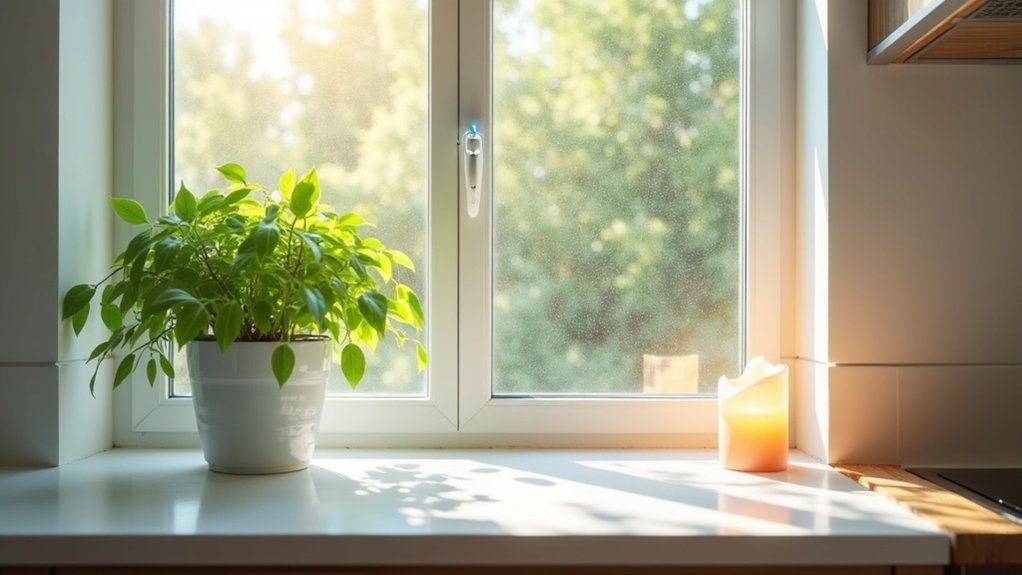
To reduce window moisture and prevent condensation, keep indoor humidity levels between 30% and 50%. Use exhaust fans during cooking and showering to vent moist air outside. Improve airflow by opening windows when possible and trimming nearby plants that block sunlight. Invest in a dehumidifier if humidity persists. Regularly clean window exteriors to minimize moisture buildup. Want to learn more effective strategies for managing humidity and preventing condensation? There are plenty of tips to contemplate!
Key Takeaways
- Use exhaust fans in kitchens and bathrooms to vent moist air outside during cooking and showering.
- Maintain indoor humidity levels between 30% and 50% to prevent condensation on windows.
- Open windows when weather permits to improve air circulation and reduce moisture buildup.
- Employ a dehumidifier in areas with persistent humidity issues to remove excess moisture.
- Enhance airflow around windows by trimming nearby plants and ensuring they receive direct sunlight.
Understanding Window Condensation
When warm, humid air inside your home meets the cooler surface of your windows, condensation can form, leading to unwanted moisture. This occurs primarily when indoor humidity levels rise above 50%, often due to cooking or bathing without proper ventilation.
To combat window condensation, maintain humidity levels between 30%-50% and enhance air circulation. Use exhaust fans when cooking or showering, and consider installing a hygrometer to monitor indoor air.
Understanding the dew point can also help you prevent condensation issues, ensuring a healthier environment and protecting your home from potential mold growth and structural damage.
Causes of Interior Window Condensation
Interior window condensation often happens because of humid activities like cooking and showering, which release moisture into the air.
If your home has poor air circulation, that moisture can settle on cold glass surfaces, leading to condensation.
Understanding these causes is key to finding effective solutions.
Humid Indoor Activities
Humidity in your home can rise greatly due to common indoor activities like cooking, showering, and washing dishes, leading to condensation on your windows.
Cooking, especially boiling, can release up to a cup of water vapor per hour, increasing moisture levels considerably.
Showering introduces 1 to 2 liters of moisture, particularly in poorly ventilated bathrooms.
Additionally, breathing and perspiration contribute to indoor humidity, with each person exhaling about 0.1 liters of water vapor hourly.
To combat condensation on windows, guarantee proper ventilation during these humid indoor activities and take steps to remove excess moisture effectively.
Poor Air Circulation
If your home has poor air circulation, it can create a breeding ground for window condensation. Stagnant, humid air often collects near windows, especially in corners or behind large furniture. This trapped warm air increases humidity levels, leading to condensation on cold glass surfaces.
To combat this, use ceiling fans in a clockwise direction during winter to circulate warm air downwards. Keep interior doors open to promote airflow and prevent humid pockets.
Regularly running exhaust fans in moisture-prone areas like kitchens and bathrooms is also essential for removing humid air and improving overall indoor air circulation.
Strategies for Reducing Indoor Humidity
To keep your indoor spaces comfortable and free from excess moisture, it’s essential to maintain humidity levels between 30% and 50%.
Use exhaust fans in kitchens and bathrooms during and after cooking or showering to effectively reduce moisture. Open windows when the weather allows to improve air circulation and let humid air escape.
Consider investing in a dehumidifier for persistent indoor humidity issues, as it can greatly lower moisture levels.
Additionally, incorporate moisture-absorbing products like DampRid or silica gel packs in problem areas to prevent condensation on surfaces.
Together, these strategies will create a healthier indoor environment for everyone.
Managing Exterior Window Condensation
To manage exterior window condensation effectively, you need to enhance airflow around your windows.
Trimming nearby shrubbery can improve circulation and let sunlight warm the glass, helping moisture evaporate faster.
Additionally, consider utilizing sun exposure to your advantage by ensuring your windows receive ample light throughout the day.
Enhancing Airflow Around Windows
While managing exterior window condensation can be a challenge, enhancing airflow around your windows is an effective solution.
Start by trimming shrubs and trees near windows to improve air circulation. Make sure your windows receive direct sunlight during the day to help warm the glass and promote moisture evaporation.
Consider installing awnings or overhangs to shield windows from rain while allowing airflow. Utilize fans or a ventilation system to balance temperatures and minimize moisture buildup.
Regularly cleaning window exteriors removes dirt that traps moisture and helps accumulated water evaporate quickly, considerably reducing exterior condensation.
Utilizing Sunlight for Evaporation
How can sunlight be harnessed to effectively reduce exterior window condensation?
Direct sunlight warms the glass, elevating its temperature and promoting evaporation of moisture.
Regularly clean your windows to guarantee sunlight can penetrate without obstruction.
Trim nearby shrubs and trees to enhance air circulation, allowing sunlight to reach the glass more efficiently.
Be mindful of weather conditions; after cool nights, open window coverings to maximize sunlight exposure during the day.
While reflective window films can help in hot weather, they also retain warmth in cooler months, minimizing external condensation formation.
Embrace these strategies to keep your windows clear and dry.
Tools and Products for Moisture Control
Effective moisture control in your home relies on a variety of tools and products designed to tackle excess humidity.
Dehumidifiers are essential for moisture removal, with larger units perfect for basements and smaller ones for tight spaces.
Dehumidifiers are crucial for reducing humidity, with larger models ideal for basements and compact versions suited for smaller areas.
Use hygrometers to monitor indoor air humidity levels, aiming for ideal humidity ranges of 30%-40% in winter and 40%-50% in summer.
Exhaust fans in kitchens and bathrooms help vent moist air outside during cooking or showering.
Additionally, water repellents can prevent condensation on windows, while silica gel packs absorb moisture in wardrobes and drawers, enhancing overall moisture control in your home.
When to Consider Professional Assistance
If you’ve tackled moisture control measures and still notice persistent condensation or mold around your windows, it might be time to contemplate professional assistance.
Consistent condensation between window panes often indicates a seal failure that requires expert replacement to restore insulation and energy-efficient performance.
If you see mold or mildew growth, it poses health risks, necessitating professional remediation.
Additionally, if humidity issues extend to walls or ceilings, an assessment by a professional can identify systemic moisture problems.
Seeking help is essential, especially when considering energy-efficient window options to enhance your home’s comfort and safety.






