
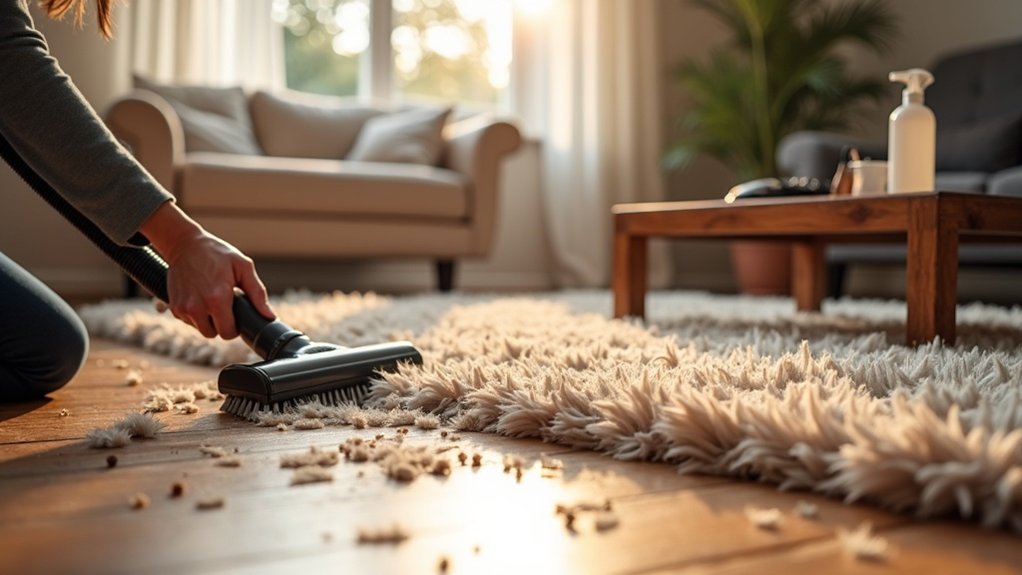
To prevent rug shedding, choose low-shedding fibers like tightly woven wool or synthetic materials. Invest in high-quality rugs, preferably hand-knotted, for better durability. Regularly vacuum using gentle techniques, adjusting settings to protect delicate fibers. Implement preventive measures like using a rug pad and rotating your rugs every six months. Keep your rugs away from heat sources and direct sunlight. If you’d like additional insights on maintaining your rug’s beauty, explore further strategies and tips.
Key Takeaways
- Choose high-quality rugs made from natural fibers, like wool from high-altitude sheep, to minimize shedding.
- Use rug pads to reduce friction on the floor and help prevent fiber loss.
- Maintain humidity levels between 30% and 50% to keep fibers moisturized and reduce shedding.
- Vacuum regularly with appropriate settings, always in the direction of the pile to avoid damage.
- Rotate rugs every six months to distribute wear evenly and minimize shedding in high-traffic areas.
Understanding Rug Shedding
When you bring a new rug into your home, it might start shedding, but don’t worry—this is often just a temporary phase.
Rug shedding can occur due to the quality of materials; high-quality wool from high-altitude sheep tends to shed less. Hand-knotted rugs, known for their structural integrity, generally experience lower shedding rates than machine-made options.
Rug shedding can be influenced by material quality; high-altitude sheep wool and hand-knotted designs shed less than machine-made rugs.
Environmental factors like humidity and temperature can also impact shedding. To combat this, proper care is essential.
Regular vacuuming and maintenance not only reduce shedding but also extend your rug’s life, ensuring it remains a beautiful centerpiece in your space for years to come.
Choosing Low-Shedding Fibres
As you explore options for new rugs, choosing low-shedding fibers can greatly enhance your home’s comfort and aesthetics.
Consider these tips:
- Opt for synthetic materials like nylon or polyester, designed to resist shedding.
- Select tightly woven natural fibers such as high-quality cotton or sisal for better durability.
- Look for labels indicating low-shedding or no-shed, ensuring minimal fiber loss.
- Evaluate construction methods; hand-knotted or hand-woven rugs offer superior stability compared to tufted options.
Investing in High-Quality Rugs
When you invest in high-quality rugs, you’re not just enhancing your space; you’re choosing materials that stand the test of time.
By evaluating the quality of the fibers and examining the construction methods, you can guarantee your rug not only looks beautiful but resists shedding.
Prioritizing long-term durability will save you headaches and keep your home looking pristine for years to come.
Assess Material Quality
Choosing the right rug can feel overwhelming, yet investing in high-quality materials is essential for preventing shedding and ensuring longevity.
To help you assess material quality, consider these factors:
- Natural Fibers: Look for premium wool from high-altitude sheep for durability.
- Hand-Knotted: Opt for hand-knotted rugs for tighter weaving and enhanced structural integrity.
- Avoid Coarse Wool: Steer clear of coarse wool or those made with adhesives, as they shed more.
- Synthetic Options: High-grade polyester can be a resilient alternative in high-traffic areas, offering lower shedding rates.
Selecting wisely will keep your rugs looking beautiful longer!
Evaluate Construction Methods
While the allure of a beautiful rug is undeniable, understanding its construction methods can make all the difference in preventing shedding and ensuring longevity.
Investing in hand-knotted or hand-woven rugs guarantees high-quality craftsmanship and structural integrity. These tightly woven options feature a high knot count, resulting in a denser, more durable fabric that sheds less over time. Rugs made from natural fibers, especially high-altitude wool, resist shedding better than coarser alternatives.
In contrast, hand-tufted rugs with adhesive backing are prone to deterioration.
Prioritize tightly woven, hand-crafted designs to enhance durability and elevate your space while serving others with quality.
Consider Long-Term Durability
Investing in high-quality rugs is essential if you want to guarantee long-term durability and minimize shedding. Here are four key factors to take into account:
- Material: Opt for hand-knotted rugs made from high-quality wool, especially from high-altitude sheep, for enhanced durability.
- Thread Count: Select rugs with a high thread count to ensure tighter weaving and structural integrity.
- Natural Materials: Choose rugs crafted from natural materials, like bamboo, for aesthetic appeal and reduced shedding.
- Synthetic Options: Advanced synthetic materials, such as polyester fibers, can also provide durability while reducing shedding.
Regular Vacuuming Techniques
To keep your rug looking its best, you need to vacuum with a gentle touch.
Adjust your vacuum settings to avoid excessive suction that could harm those delicate fibers, and always go with the pile’s direction for a thorough clean.
Aim to vacuum regularly—at least once a week—to prevent dirt buildup that leads to shedding.
Gentle Vacuuming Approach
A gentle vacuuming approach is essential for maintaining the beauty and longevity of your rug.
To prevent shedding and protect delicate fibers, follow these tips:
- Use a vacuum with adjustable settings to avoid excessive suction.
- Always vacuum in the direction of the pile to minimize friction.
- Opt for a gentle brush attachment or a setting specifically designed for delicate rugs.
- Avoid a heavy beater bar, as it can damage your rug’s structure and increase shedding.
Schedule vacuuming sessions at least once a week to capture loose fibers before they contribute to significant shedding.
Your rug will thank you!
Adjust Vacuum Settings
Adjusting your vacuum settings is essential for preserving the integrity of your rug while keeping it clean. Use adjustable suction settings to protect delicate rug fibers from excessive force that can lead to shedding.
Opt for lower suction when vacuuming wool rugs and higher suction for synthetic fibers. Regularly clean the vacuum’s beater bar to remove entangled loose fibers, ensuring efficient operation.
Always vacuum in the direction of the pile to minimize friction, which helps prevent loosened fibers. In high-traffic areas, aim to vacuum more frequently to capture loose fibers before they embed into your beautiful rug.
Frequency of Vacuuming
Regularly vacuuming your rugs can make a significant difference in their longevity and appearance. Aim to vacuum at least once a week to keep shedding at bay.
Here are some tips to enhance your cleaning process:
- Use adjustable suction to protect delicate fibers.
- Vacuum in the direction of the pile for a gentle touch.
- Opt for a beater bar on a low setting to avoid damaging the fibers.
- Regularly check for pet hair and debris to maintain a pristine look.
These techniques will help you protect your rugs and enjoy their beauty for years to come!
Implementing Preventive Measures
Though it may seem inevitable, rug shedding can be considerably reduced with a few proactive steps.
Regularly vacuum your rugs on a low setting to catch loose fibers while preserving their quality. Rotate them every six months to evenly distribute wear, especially in high-traffic areas.
Using a high-quality rug pad can minimize friction with the floor, further preventing shedding over time. Keep humidity levels in check, as excess moisture can fray natural fibers.
Finally, avoid placing your rugs in direct sunlight to prevent fading and weakening, which can lead to increased shedding.
With these measures, you can enjoy beautiful rugs longer!
Managing Environmental Factors
When it comes to rug care, managing environmental factors plays an essential role in preventing shedding. Here are some key steps to take into account:
Managing environmental factors is crucial for rug care and helps prevent shedding effectively.
- Maintain humidity levels between 30% and 50% to protect fibers and reduce shedding.
- Use a dehumidifier or air conditioner to prevent moisture absorption that can lead to fraying.
- Avoid placing rugs in direct sunlight, as UV rays weaken their structural integrity.
- Keep rugs away from heating vents to control temperature variations that can dry out fibers.
Regular cleaning and dusting around your rugs can also minimize allergens and debris, further protecting your beautiful investments.






