
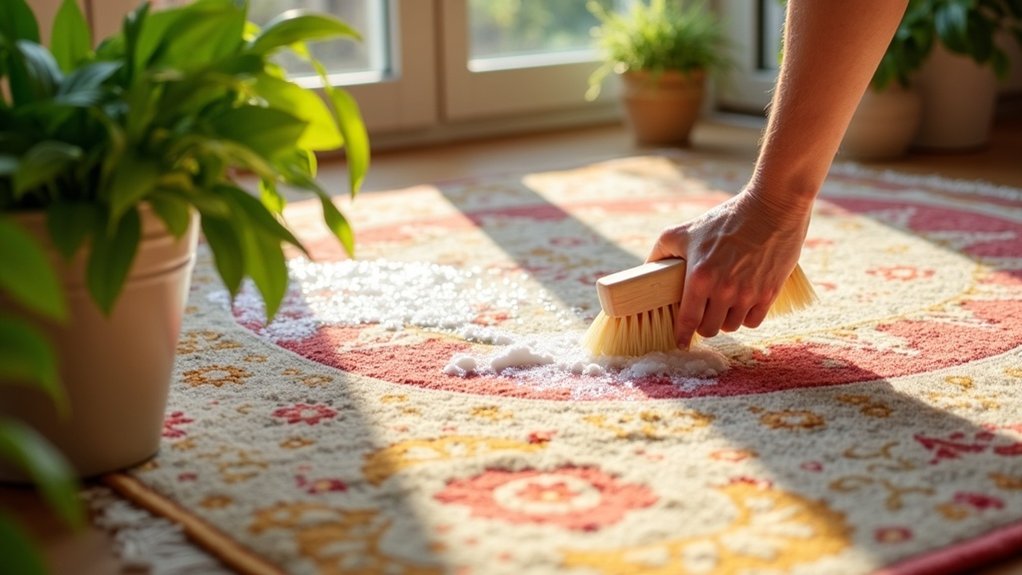
To clean polypropylene rugs, start by vacuuming them weekly to prevent dirt buildup. For stains, blot them quickly with a clean cloth and use mild soap for deeper cleaning, focusing on stained areas. Rinse thoroughly and air dry flat to avoid any moisture trapping. Test for colorfastness before using any cleaning solution. If tough stains persist or for intricate designs, it’s wise to consult a professional. Discover more essential tips about maintaining your rug’s vibrancy and durability.
Key Takeaways
- Vacuum your polypropylene rug weekly to prevent dirt buildup and prolong its lifespan.
- For stains, blot with a clean cloth and scrape off solids before cleaning.
- Wash the rug outside using mild dish soap and a scrub brush for gentle cleaning.
- Test for colorfastness on a hidden area before cleaning to avoid dye transfer.
- Seek professional help for severe stains or intricate designs that require special care.
Vacuum Regularly
To keep your polypropylene rugs looking their best, you should vacuum them at least once a week. Regular vacuuming prevents dirt particles, dust, and debris from settling into the fibers, which helps prolong your rug’s lifespan.
In homes with pets or children, consider vacuuming bi-weekly, especially in high traffic areas. Always use the suction-only setting on your vacuum to avoid damaging the yarns.
Spot Cleaning Stains
Stains on polypropylene rugs can be a nuisance, but with prompt action, you can effectively keep them at bay.
Stains on polypropylene rugs can be troublesome, but quick action can help you manage them effectively.
Follow these steps for successful spot cleaning:
- Blot the stain: Use a clean cloth or paper towel to gently blot wet spots, avoiding rubbing to prevent deeper penetration.
- Address solid stains: Carefully scrape off any debris before blotting with water and a clean cloth.
- Check cleaning solutions: Always refer to the manufacturer’s directions for compatibility with your rug, especially for oil-based stains.
Timely attention to stains simplifies cleaning and helps maintain your rug’s stain-resistant qualities.
Washing Your Polypropylene Rug
Keeping your polypropylene rug clean goes beyond just spot cleaning; regular washing is key to maintaining its appearance and longevity. To wash your rug, take it outside and thoroughly wet it down with a garden hose. Add a few drops of mild dish soap and use a scrub brush to gently clean, focusing on stained areas. Once done, rinse the rug with clean water to remove all soap residue. Finally, air dry the rug by laying it flat on a clothesline or railing, ensuring both sides are completely dry before bringing it indoors.
| Steps | Actions |
|---|---|
| Wet the rug | Use a garden hose |
| Apply soap | Use mild dish soap |
| Scrub | Focus on stained areas |
| Rinse | Thoroughly with clean water |
Drying Your Polypropylene Rug
Once you’ve washed your polypropylene rug, drying it properly is crucial to preserve its quality.
Here’s how to air dry your rug effectively:
- Hang it up: Use a clothesline or railing, making certain both sides are exposed for good air circulation.
- Avoid direct sunlight: Keep your rug in the shade to protect the fibers and maintain color integrity.
- Check periodically: Monitor the drying process to guarantee it dries evenly and to prevent any moisture-related issues like mold.
Make certain your rug is completely dry before bringing it back inside, ensuring it remains in great condition for years to come.
Protecting Rug Colors From Fading During Cleaning
Before you start cleaning your polypropylene rug, it’s essential to conduct a colorfastness test on a hidden area to check for any potential bleeding or fading.
Stick to mild cleaning solutions specifically made for synthetic fibers, as harsh chemicals can damage the rug’s colors.
Additionally, make sure to limit your rug’s exposure to direct sunlight during and after cleaning to protect against UV degradation.
Colorfastness Testing Importance
How can you guarantee your polypropylene rug stays vibrant and free from fading during cleaning? The key is colorfastness testing. Here’s how to do it:
- Select an inconspicuous area: Choose a small, hidden spot on the rug.
- Apply the cleaning solution: Use a clean white cloth to blot the area and observe for dye transfer.
- Check for discoloration: After a few minutes, if there’s no fading, your solution is safe for the entire rug.
Since polypropylene fibers resist fading, using milder products preserves those vibrant colors and keeps your rug looking fresh and appealing for years to come.
Mild Cleaning Solutions Only
After ensuring your cleaning solution is safe through colorfastness testing, it’s important to choose mild cleaning solutions specifically designed for synthetic fibers like polypropylene. Using a mild detergent helps protect your rug’s color integrity while effectively removing dirt. Always avoid harsh chemicals, as they can weaken fibers and cause fading. Here’s a quick reference for effective cleaning methods:
| Cleaning Method | Recommendation |
|---|---|
| Regular Maintenance | Gentle vacuuming |
| Spot Cleaning | Diluted mild detergent |
| Deep Cleaning | Limit harsh chemicals |
Avoid Direct Sunlight
While cleaning your polypropylene rug, it’s important to keep it out of direct sunlight to prevent fading and preserve its vibrant colors.
Here are some practical tips to help you maintain its appearance:
- Air-Dry in the Shade: Always dry-clean your rug in a shaded area to shield it from harsh UV rays.
- Use UV-Protective Spray: Consider applying a UV-protective spray for added defense against sun exposure.
- Rotate Regularly: Regularly rotate your polypropylene area rugs to guarantee even light exposure, minimizing sun damage.
How To Remove Tough Stains
Tackling tough stains on your polypropylene rug can be a straightforward process if you act quickly and use the right methods.
For food stains, mix a mild detergent solution, let it sit for five minutes, then blot with a clean cloth.
For pet stains, choose an enzymatic cleaner and follow the manufacturer’s instructions.
Oil-based stains require a solvent-based cleaner; always conduct a spot test first.
Natural solutions, like a mixture of vinegar and baking soda, can also effectively tackle tough stains.
Knowing When Professional Rug Cleaners Are Needed
Knowing when to call in professional rug cleaners can save you time and prevent further damage to your polypropylene rug.
Here are three situations when you should consider consulting a professional:
- Severe Stains: For tough stains like red wine or ink, specialized equipment is often necessary for effective removal.
- Water Damage: If your rug has experienced water damage, professionals can remove excess water and prevent mold growth.
- Intricate Designs: Rugs with complex weaves require careful handling, making a thorough cleaning by experts indispensable.
Choosing the right service is vital—check their reviews and certifications to guarantee quality rug cleaning.






