
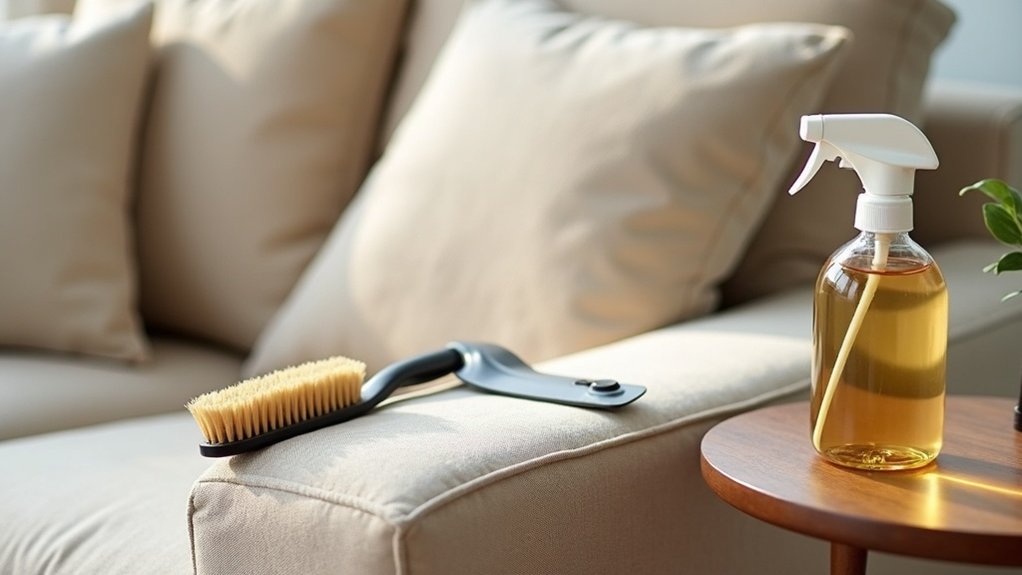
To clean your couch without water, start by vacuuming with an upholstery attachment to remove dirt. Test a dry cleaning solvent on a hidden area for colorfastness. Gently dab the solvent on stains, and avoid rubbing. Sprinkle baking soda to neutralize odors, leaving it for 10-15 minutes before vacuuming again. Remember not to oversaturate the fabric, as moisture can cause mold. For more detailed techniques and tips, you’ll find valuable insights ahead.
Key Takeaways
- Vacuum the couch with an upholstery attachment to remove dirt and debris before applying any cleaning solutions.
- Test a dry cleaning solvent on an inconspicuous area to check for colorfastness before use.
- Gently dab the cleaning solution on stains instead of rubbing to avoid damaging the fabric.
- Sprinkle baking soda on the couch to absorb odors, letting it sit for 10-15 minutes before vacuuming it up.
- Regularly vacuum and rotate cushions to maintain cleanliness and prevent wear on the fabric.
Importance of Water-Free Cleaning
While you might think water is the go-to solution for cleaning, it’s essential to recognize the importance of water-free cleaning, especially for certain fabrics.
Upholstery labeled with cleaning code “S” requires solvent-based solutions to maintain integrity and avoid damage. By using water-free methods, you minimize moisture, preventing mold and mildew growth that could compromise your furniture.
Upholstery with an “S” cleaning code benefits from solvent-based solutions, preventing moisture-related damage and preserving fabric integrity.
This approach not only keeps your couch looking fresh but also extends its lifespan by protecting fabric fibers from shrinkage and discoloration.
Embracing dry cleaning methods guarantees a thorough clean without the risks associated with excessive water exposure.
Step-by-Step Process on How to Clean Fabric Sofa Without Water
To effectively clean your fabric sofa without water, start by gathering the necessary supplies and preparing the area.
Use a vacuum cleaner with an upholstery attachment to remove loose dirt and debris.
Next, test your chosen dry cleaning solvent for colorfastness on an inconspicuous area.
For any stains, gently dab the cleaning solution rather than rubbing, which can spread the stain.
After spot cleaning, sprinkle baking soda over the sofa to absorb odors, letting it sit for 10-15 minutes before vacuuming it away.
Finally, brush and fluff the fabric to restore its texture and keep your sofa looking fresh.
Common Cleaning Mistakes to Avoid
When cleaning your couch, being aware of common mistakes can save you from damaging your upholstery.
Avoid using harsh chemicals, as they can weaken fibers and cause discoloration. Instead, opt for gentle cleaning solutions. Always perform a colorfastness test prior to application.
Remember not to over-saturate the fabric; moisture buildup can lead to mold. Use a soft-bristled brush for lifting dirt and clean stains, and be sure to avoid vigorous scrubbing, which can damage the fabric and spread stains.
Regular maintenance, like vacuuming, helps prevent dirt accumulation, making future cleaning easier and more effective.
Maintaining Cleanliness of Your Clean Sofa
After ensuring your couch is clean and free from stains, maintaining its cleanliness becomes a priority to preserve its appearance and longevity. Regularly vacuum your sofa once a month to eliminate dirt and prevent settling into the fabric. Rotate cushions frequently for even wear, and utilize armrest covers in high-traffic areas to protect against stains. Avoid food and beverages on the sofa, and promptly treat any stains with the spot cleaning method to prevent permanent marks. Consider using an upholstery cleaner for deeper cleans as needed.
| Maintenance Task | Purpose |
|---|---|
| Regularly Vacuum | Eliminate surface dirt |
| Rotate Cushions | Prolong upholstery lifespan |
| Use Armrest Covers | Protect against wear |
Tips for Specific Upholstery Types
Understanding the specific cleaning requirements for different upholstery types is essential for maintaining your sofa’s appearance and longevity.
For Code S upholstery, only use dry cleaning methods or water-free solvents to avoid damaging the fabric.
Polyester sofas can be cleaned with a lightly dampened sponge and a cleaning mixture, avoiding excessive pressure.
Leather requires regular cleaning with a soft cloth and a conditioner to prevent cracking.
For cotton or linen fabric sofas, a vinegar solution works well, but remember to rinse with a damp cloth to remove residue.
Always check the care tag to confirm proper maintenance for your upholstery.






