
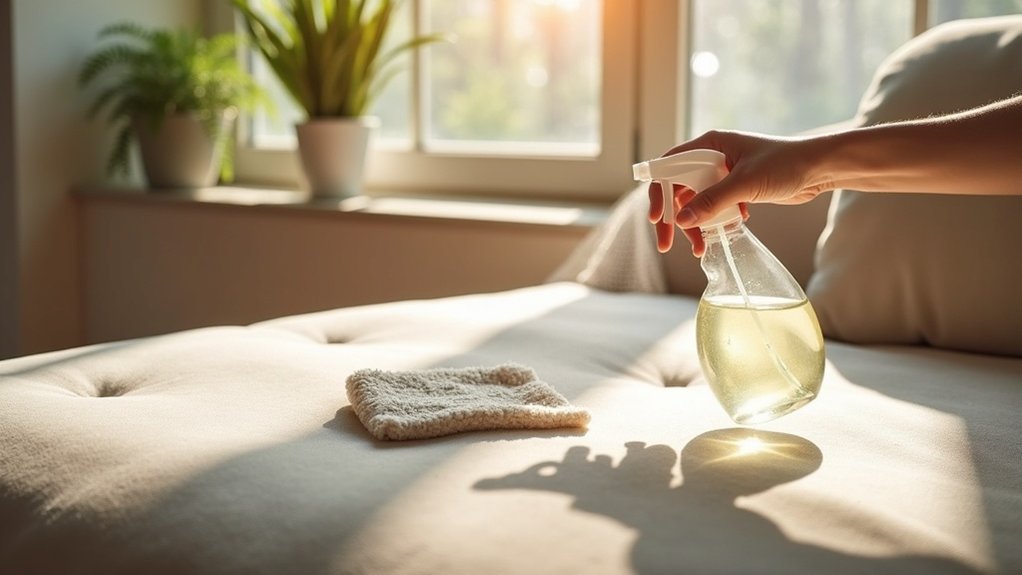
To clean your polyester couch, start by checking the care tag for cleaning codes. Vacuum it thoroughly to remove dust and dirt. For stains, mix mild detergent with water and dab the affected area with a soft cloth. Rinse with a damp microfiber cloth and let it air dry. Avoid using high heat methods, as they can damage the fabric. For more tips on keeping your couch fresh, continue exploring effective maintenance techniques.
Key Takeaways
- Check the cleaning code on your couch’s tag to determine the appropriate cleaning method.
- Vacuum the couch weekly to remove dust, dirt, and pet hair buildup.
- For stains, mix a mild detergent with water and gently dab the area with a cloth.
- Avoid high heat cleaning methods like steam cleaning, which can damage the polyester fabric.
- Rotate and flip cushions regularly to ensure even wear and prolong the couch’s lifespan.
What Is Polyester
Polyester, a versatile synthetic textile, is crafted from polyethylene terephthalate (PET), a polymer sourced from petroleum products.
This synthetic fabric offers remarkable durability, making it a popular choice for upholstery in high-traffic areas. Its resistance to stains and moisture guarantees that your furniture remains clean and presentable, even in busy households.
Polyester’s exceptional durability and resistance to stains make it perfect for high-traffic upholstery, keeping your furniture looking pristine.
While polyester is non-biodegradable, it’s 100% recyclable, providing a more sustainable option compared to many other synthetic materials.
Although less breathable than natural fibers, polyester retains its shape without stretching, offering long-lasting comfort and resilience, making it ideal for homes with pets and active lifestyles.
Is Polyester Couches Eco-friendly
When considering the eco-friendliness of polyester couches, it’s essential to note that while polyester isn’t biodegradable, it’s 100% recyclable.
You’ll find that many sustainable furniture brands utilize responsible manufacturing practices, combining polyester with ethically sourced materials.
Recyclability of Polyester
While many might assume that polyester couches are harmful to the environment due to their synthetic origins, the truth is more nuanced. Polyester, made from polyethylene terephthalate (PET), is 100% recyclable. This quality allows you to repurpose the material, greatly reducing waste in landfills. Its durability means these couches have a longer lifespan compared to natural fiber options, contributing to sustainability. Eco-conscious brands enhance this further by combining responsibly sourced wood with polyester upholstery. By recycling polyester, you can decrease the demand for new petroleum products, thereby minimizing the environmental impact.
| Property | Description | Benefit |
|---|---|---|
| Material | Synthetic Polymer (PET) | Non-biodegradable but recyclable |
| Durability | Long-lasting | Reduces need for replacements |
| Eco-conscious Brands | Use responsibly sourced wood | Enhances overall eco-friendliness |
| Recycling Process | Reduces waste | Lessens environmental impact |
| Lifespan | Extended | Promotes sustainability |
Sustainable Manufacturing Practices
Although many people associate synthetic fabrics with environmental harm, sustainable manufacturing practices have emerged to make polyester couches a more eco-friendly option.
By using recycled polyester made from post-consumer plastic bottles, manufacturers considerably reduce landfill waste. The durability of polyester couches guarantees they last longer, minimizing the need for replacements.
Eco-conscious options, incorporating responsibly sourced materials, enhance the environmental appeal of these products. Additionally, sustainable manufacturing techniques often involve reduced water usage and lower emissions compared to traditional methods.
Pros And Cons Of A Polyester Couch
If you’re considering a polyester couch, you’ll find it comes with both notable advantages and drawbacks.
On the plus side, polyester is durable and stain resistant, making it ideal for high-traffic areas and homes with pets. It’s easy to clean, requiring minimal maintenance, and tends to be cost-effective compared to natural fibers.
However, the material is less breathable, which can compromise comfort in hot and humid environments. While not biodegradable, polyester is 100% recyclable, contributing to sustainability.
Weigh these factors carefully to guarantee your choice aligns with your lifestyle and values while serving others in your home.
How Often Should You Clean A Couch
To keep your polyester couch looking its best, it’s essential to establish a regular cleaning routine.
Start with weekly cleaning: vacuum your couch to prevent dirt and pet hair buildup. If you notice any stains, spot clean them immediately to avoid setting.
Every 6 to 12 months, plan for a deep clean based on usage, especially if you have pets or kids. If your couch has removable covers, wash them according to the care instructions every few months for ideal cleanliness.
Additionally, rotate and flip cushions regularly to distribute wear, contributing to a cleaner and fresher appearance.
Steps for How to Clean Your Polyester Couch
With a regular cleaning routine in place, you’re ready to tackle the steps for cleaning your polyester couch effectively.
Start by checking the cleaning code on the tag. Then, follow these steps:
- Vacuum the couch to remove dust and debris.
- Use a dry brush to agitate the fabric.
- For spot cleaning, mix mild detergent with water, apply it to a clean cloth, and dab the stained area.
- Rinse with a damp microfiber cloth to eliminate residue, and allow your couch to air dry completely.
Regularly vacuuming and addressing spills promptly will help maintain your polyester couches for years to come.
Cleaning Solution, Tips And Tricks
While maintaining your polyester couch, using the right cleaning solutions can make all the difference.
For stubborn stains, mix equal parts dish soap, white vinegar, and warm water. Always perform a spot test on a hidden area to avoid discoloration.
For tough stains, create a solution of dish soap, white vinegar, and warm water, and always test on a hidden spot first.
When treating stains, use a damp cloth to dab the cleaning solution gently, preventing damage to the fabric.
To deodorize and refresh your couch, sprinkle baking soda liberally, let it sit for 15-30 minutes, then vacuum it up.
Regularly vacuuming your couch will help remove dust and debris, preserving its appearance and extending its lifespan.
Things to Avoid When Cleaning Your Polyester Couch
When cleaning your polyester couch, there are key things you need to avoid to maintain its integrity.
Don’t use harsh chemicals like bleach or ammonia, as these can damage the fabric.
Also, steer clear of high heat methods and excessive moisture, which can warp or weaken the fibers.
Harsh Chemical Ingredients
Cleaning your polyester couch requires caution, especially regarding the chemicals you choose.
Using harsh cleaning agents can damage the fabric and lead to discoloration. Always opt for a gentle, water-based cleaner instead.
Here are some ingredients to avoid:
- Avoid using bleach or ammonia, as they can cause permanent discoloration.
- Stay clear of hydrochloric acid and sulfuric acid; they compromise the fabric’s integrity.
- Don’t mix cleaning products; combinations like phenol and trichloromethane can harm polyester.
- Always check product labels to guarantee compatibility with polyester and consider professional cleaning for stubborn stains.
Protect your couch by choosing wisely!
Excessive Moisture Risks
Excessive moisture during the cleaning process can pose serious risks to your polyester couch, so it’s essential to approach this task with care.
Over-saturation can lead to waterlogged padding, causing mold and deterioration. You must avoid soaking the fabric, as prolonged exposure to moisture weakens fibers, leading to fraying.
Always quickly blot spills with a clean cloth instead of rubbing; this helps prevent excessive moisture absorption, making stains harder to remove.
Steer clear of steam cleaning and harsh cleaning agents that can damage the polyester fabric.
Protect your couch by being mindful of moisture throughout the cleaning process.
High Heat Methods
High heat methods can be particularly damaging to your polyester couch, so it’s crucial to steer clear of them during your cleaning routine.
Here are key practices to avoid:
- Skip steam cleaning; high heat alters polyester’s texture.
- Don’t use hot water; it can cause fiber shrinkage.
- Avoid drying at high temperatures, like tumble drying, to prevent fabric deterioration.
- Never apply heat directly to stains; it sets them permanently.
Always check cleaning product labels for compatibility, steering clear of those suggesting high heat or harsh chemicals that could harm your beloved polyester couches.
Protect their integrity while keeping them fresh!
How to Best Care For Your Polyester Couch
While caring for your polyester couch may seem straightforward, implementing a few key practices can greatly enhance its longevity and appearance.
Regularly vacuum your polyester couch to remove dust and debris, preventing build-up. When spills occur, spot clean immediately using a damp cloth and a mild detergent solution to prevent stains.
Rotate cushions periodically to guarantee even wear and maintain comfort. Consider applying a fabric protector to enhance your couch’s resistance to stains and spills.
Finally, keep your couch out of direct sunlight to prevent fading, preserving the vibrancy of your polyester fabric for years to come.






