
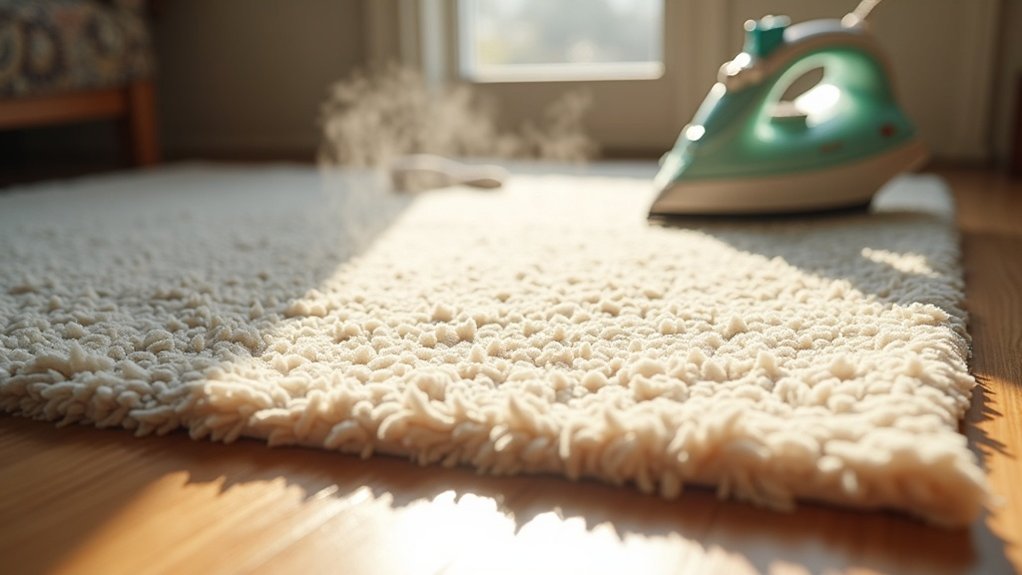
To flatten rug edges, try placing ice cubes on the curled corners and weigh them down overnight—moisture helps relax the fibers. You can also reverse roll the rug or gently steam the corners using a damp towel and low heat. For immediate fixes, use double-sided rug tape to secure the edges. Regular maintenance, like cleaning non-slip grippers and properly storing rugs, is key to preventing curling. Discover more tips to maintain your rug’s appeal and longevity.
Key Takeaways
- Use ice cubes on curled corners, weigh them down overnight, and let moisture relax the fibers for flattening.
- Reverse roll the rug by flipping it in the opposite direction of the creases to help straighten edges.
- Apply low-heat steaming by ironing the corners covered with a damp towel to smooth out wrinkles.
- Utilize double-sided carpet tape or rug tape to secure edges without leaving residue for a flat appearance.
- Regularly inspect and maintain rug pads to prevent curling and ensure stability on various flooring types.
Methods to Flatten Rug Corners
When your rug corners curl up, it can disrupt the aesthetic of your space, but there are effective methods to flatten them quickly.
One simple way is to place ice cubes on the curled corners, cover them with a heavy object overnight, and let moisture relax the fibers.
Place ice cubes on curled rug corners, weigh them down overnight, and let moisture work its magic on the fibers.
Alternatively, try low-heat steaming by turning the rug over, covering it with a damp towel, and gently ironing the corners.
You can also use a wrinkle release spray designed for upholstery, allowing your rug to dry flat.
For added weight, consider applying DIY peel-and-stick vinyl tiles to the back of the corners for support.
Adhesive Solutions for Curling
When dealing with curling rug edges, adhesive solutions can be your best friend.
You can choose from various types of tape, like double-sided carpet tape or rug tape, to keep those edges flat, or opt for non-slip grippers to secure corners.
If you prefer a non-adhesive method, rug pins are a simple yet effective way to hold your rug in place without causing damage.
Types of Adhesive Tapes
To effectively combat curling edges on your rugs, choosing the right adhesive tape is essential. Here are some options that can help you maintain a polished look:
- Rug Tape: This double-sided tape secures edges without leaving residue, perfect for renters.
- Adhesive Rug Grippers: With a hook-and-loop design, these allow for easy repositioning.
- Non-Slip Adhesive Floor Grippers: Their sticky backing minimizes curling while keeping rugs in place.
- Rug Pins: For a more permanent solution, use these to anchor rug edges securely without adhesives.
Select the best option to guarantee your rugs stay beautifully flat and inviting.
Non-Slip Gripper Options
Maintaining a beautiful rug often hinges on effective solutions for curling edges, and non-slip gripper options offer practical adhesive methods to keep your rugs flat and secure. Here are some popular choices:
| Gripper Type | Description |
|---|---|
| Rug Tape | Adheres underside to prevent edges from lifting |
| Hook-and-Loop Pads | Dual-sided adhesive keeps corners attached |
| Non-Adhesive Pads | Offers cushioning without leaving residue |
Rug Pin Techniques
While curling edges can detract from the overall aesthetic of your rug, using rug pins presents a straightforward way to keep them securely in place.
To effectively use rug pins and flatten your rug, follow these steps:
- Select carpet-specific rug pins for ideal grip.
- Strategically insert pins into corners and areas with significant curling.
- Regularly check the rug’s positioning and adjust or replace pins as needed.
- Enjoy the practicality of rug pins in high-traffic areas, allowing easy removal without residue.
Techniques for Removing Wrinkles
Wrinkles in your rug can detract from its beauty and disrupt the overall aesthetic of your space, but several effective techniques can help you achieve smooth, flat edges.
Try reverse rolling by flipping the rug and rolling it in the opposite direction of the creases for a few hours. You can also place weighted corners on curled areas to apply pressure.
A wrinkle release solution is perfect for spraying and letting the rug dry flat.
Finally, the ice cube method involves placing ice cubes on the corners and covering them with a heavy object to introduce moisture and relax the fibers.
Preventative Measures for Rug Maintenance
To keep your rug looking pristine and prevent those pesky curled edges, regular maintenance is essential. Here are some effective measures you can take:
Regular maintenance is key to keeping your rug pristine and preventing curled edges.
- Clean and maintain non-slip rug grippers to guarantee they effectively prevent curling and movement.
- Choose an appropriate rug pad based on your flooring type for added stability.
- Use adhesive solutions like rug tape to securely hold down the edges and prevent lifting.
- Store rugs properly when not in use to avoid memory that leads to curling upon unrolling.
Understanding Curling Causes and Additional Tips
When you notice curling edges on your rug, it’s essential to understand the common causes behind it.
Factors like tight rolls during storage, exposure to heat, and moisture from cleaning can all affect the fibers’ ability to relax.
Common Curling Causes
Curling edges on rugs can be frustrating, especially if you’ve just unrolled a new piece in your home.
Understanding the common causes will help you flatten them effectively:
- New rugs often retain a “memory” from being tightly rolled, leading to curling.
- Warm temperatures can soften fibers, causing edges to curl upwards.
- Recently cleaned rugs may form creases as moisture affects the fibers.
- High traffic areas disrupt positioning, resulting in curling and wrinkles.
Identifying these causes enables you to take proactive steps in maintaining the beauty of your area rugs while ensuring they lay flat and inviting.
Time-Related Flattening Tips
While you might feel tempted to force a rug to lay flat immediately after unrolling, patience is key to achieving the best results.
Give your rug a day or two to naturally flatten; it often needs time to adjust after being tightly rolled. To help flatten your rug, guarantee it’s in a stable, cool environment, especially if it’s recently cleaned.
High traffic areas can lead to curling, so consider rotating your rug to distribute wear evenly. Allowing it to breathe after cleaning or storage will enable the fibers to relax, enhancing its aesthetic appeal on hard floors.
Impact of Heat Exposure
Exposing your rug to heat can greatly impact its appearance, as temperature fluctuations often cause fibers to curl and edges to lift.
To prevent curling, especially in rugs made from natural fibers, consider these tips:
- Keep rugs out of direct sunlight to avoid overheating.
- Allow your rug to acclimatize to room temperature after cleaning or storage.
- Use cool water for cleaning to maintain the integrity of the fibers.
- If using steam, guarantee proper drying to avoid reverting to curled states.
When to Call a Professional
If your rug features valuable materials or is an antique, calling a professional is crucial to prevent any potential damage during flattening attempts.
Professionals utilize specialized steaming techniques that guarantee colorfastness, safeguarding your investment. If you’ve tried DIY methods without success after a week, seeking expert help will save you time and frustration.
Professionals use advanced steaming techniques to ensure colorfastness, protecting your valuable rug investment from damage.
Additionally, professional carpet dealers excel in stretching larger or complex rugs, providing the precise attention they need. For high-end rugs, these services often assure results, guaranteeing your rug maintains its aesthetic appeal while being expertly flattened.
Don’t compromise your investment; trust the professionals.
Maintenance Tips
To keep your rug looking its best and maintain flat edges, regular maintenance is key. Follow these tips:
- Vacuum your rug regularly to remove dirt and debris, preventing curling.
- Rotate the rug every few months for even wear and to avoid uneven edges.
- Clean spills immediately to prevent staining and moisture-related warping.
- When you need to store your rug, avoid rolling it tightly to prevent memory issues that lead to curled edges.
Additionally, using a non-adhesive slip-resistant rug pad can provide cushioning and help keep those edges flat on hard flooring.
Your guests will appreciate the attention to detail!






