
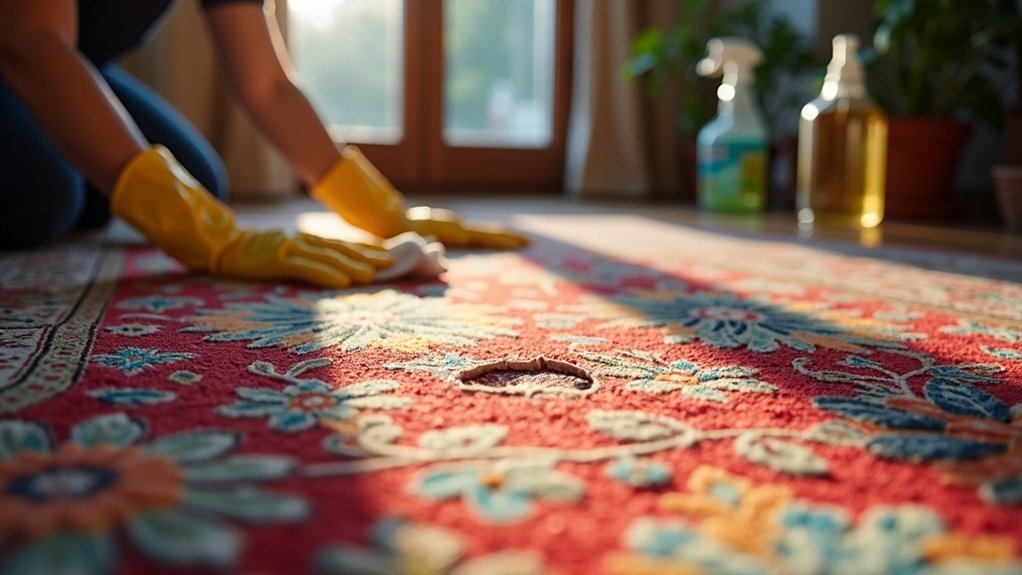
To effectively spot clean area rugs, start by vacuuming to remove dust. Identify the stain type—water-based, oil-based, protein-based, or dye-based—and then blot the stain with a clean white cloth. For water-based stains, use a mild detergent and lukewarm water; for oil-based stains, a dry-solvent spot cleaner is best. Rinse with clean water and allow to air dry completely. If stubborn stains persist, you may need professional help. More techniques await to guarantee your rug stays pristine.
Key Takeaways
- Begin by vacuuming the area rug to remove dust and debris before spot cleaning any stains.
- Blot stains promptly with a clean, absorbent white cloth to soak up excess liquid without rubbing.
- Identify the stain type (water-based, oil-based, protein-based, or dye-based) to select the appropriate cleaning method.
- Rinse the affected area with lukewarm water and blot dry to remove soap, avoiding oversaturation.
- For persistent stains or delicate rugs, consider professional cleaning to ensure proper care and thorough removal.
What You Need for Spot Cleaning
When you’re ready to tackle spot cleaning your area rugs, having the right tools on hand is crucial for effective results.
Start with a vacuum to remove dust and debris before addressing any stains. For blotting, use clean white cotton towels to prevent color transfer.
A soft brush, like an old toothbrush, helps work mild dish soap diluted in clean water into stubborn spots gently. If needed, a stain remover can further assist in tackling difficult stains.
For particularly challenging issues, consider a professional cleaner or a portable upholstery-and-carpet-cleaning machine to guarantee your rugs look their best.
Identifying Different Types of Stains
When it comes to spot cleaning area rugs, identifying the type of stain is essential for effective treatment.
Different stains, such as water-based, oil-based, or dye-based, require specific cleaning methods to avoid damage and color bleeding.
Additionally, considering the rug’s colorfastness is important to guarantee that the cleaning solution won’t alter its appearance.
Common Stain Types
Identifying different types of stains on area rugs is essential for effective cleaning.
For water-based stains, like coffee or juice, use mild soap and water.
Oil-based stains, such as grease, typically need dry-solvent spot cleaners to remove them.
Protein-based stains, including urine or blood, require immediate treatment with enzyme cleaners or a vinegar-water mix to break down proteins.
Dye stains, like red wine or ink, can be stubborn and often need a specific stain removal solution.
Always identify the type of stain first; different stains require tailored cleaning solutions to avoid setting the stain or damaging your rug.
Colorfastness Considerations
How can you guarantee that your area rug maintains its vibrant colors while cleaning it?
Start by checking the care label for specific guidelines regarding colorfastness. Different stains, like water-based or oil-based, may react differently depending on the rug’s fibers.
Natural fibers, such as wool, can bleed color, whereas synthetic options like nylon are often more resilient.
Before applying any cleaning solutions, test a small, inconspicuous area; use a damp white cloth to check for color transfers.
If the rug’s colors bleed, consider professional cleaning instead of DIY methods to preserve its beauty and integrity.
Immediate Steps to Take After a Spill
When a spill occurs, your first action should be to blot the area with a clean, absorbent white cloth to soak up excess liquid—don’t rub, as that can spread the stain.
For water-based spills, mix a mild detergent with lukewarm water and apply it gently with a cloth.
Always remember to test any cleaning solution on a hidden part of the rug first to avoid damage.
Blot, Don’t Rub
Spills can happen in an instant, and your immediate response is crucial to preserving your area rug. Start by using a clean white cotton towel to blot the liquid. Apply gentle pressure to absorb the liquid, lifting the stain instead of rubbing, which can damage the fibers. Frequently switch to fresh towel sections to prevent reapplying the stain.
| Step | Action |
|---|---|
| Blot | Use a clean towel to absorb liquid |
| Apply Pressure | Gently press to lift the stain |
| Rinse & Dry | Rinse with clean water and blot dry |
This guarantees your rug remains clean and undamaged.
Use Mild Detergent
Act quickly after a spill to minimize damage to your area rug.
Follow these steps to effectively spot clean using a mild detergent:
- Blot the stain immediately with a clean, absorbent white cloth to prevent further absorption.
- Mix 1 tablespoon of mild dish soap with 2 cups of warm water to create a well-diluted cleaning solution.
- Use a soft-bristled brush or a clean cloth to gently work the solution into the stained area.
- Rinse with a damp cloth to remove soap residue and continue blotting until you’ve removed all moisture to prevent mildew.
Recommended Stain Removal Techniques
Removing stains from area rugs requires the right techniques tailored to the type of stain. For effective cleaning, consider the following methods:
| Stain Type | Recommended Technique |
|---|---|
| General Stains | Mix 1 tbsp detergent, 1 tbsp vinegar, and 2 cups water. Apply and blot with a clean cloth. |
| Coffee/Tea Stains | Soak up excess liquid, then apply the detergent solution, rinse, and blot. |
| Fat-Based Stains | Use a dry-solvent spot cleaner; apply to a cloth and blot the stain until it lifts. |
Rinsing and Drying the Affected Area
After applying the appropriate stain removal technique, rinsing the affected area is essential to eliminate any lingering soap residue.
Follow these steps for effective rinsing and drying:
- Use clean, lukewarm water to rinse the area, ensuring you remove all soap.
- Gently blot the area with a clean white cloth to absorb excess moisture without rubbing.
- Avoid oversaturating the rug to prevent mildew growth and damage.
- Allow the area to air dry completely, using fans to expedite the process.
Once dry, vacuum lightly to restore the rug’s texture and lift the fibers, ensuring it looks clean and fresh.
When to Seek Professional Help
When should you consider bringing in a professional for your area rug?
If you notice significant color bleeding or dye transfer after your spot cleaning attempts, it’s essential to seek help to avoid further damage.
Stubborn stains that resist your efforts also warrant professional cleaners, who possess specialized products and equipment.
Antique or delicate rugs, especially silk or wool, require expert care to prevent damage.
Additionally, if your rug emits an unpleasant odor that lingers, this may indicate mold or mildew, necessitating professional intervention.
Finally, rugs affected by pet urine need professional cleaning for complete stain and odor removal.
Preventative Measures for Future Stains
To effectively prevent future stains on your area rugs, it’s crucial to establish a consistent maintenance routine.
Here are four preventative measures you can implement:
- Vacuum regularly: Aim to vacuum at least once a week to remove dust and debris, helping to reduce stains.
- No shoes policy: Encourage guests to remove shoes before entering, minimizing dirt tracked onto your rugs.
- Use rug pads: These protect your rugs from moisture and dirt, reducing the risk of stains.
- Apply fabric protector: Treat your rugs with a fabric protector spray to create a barrier against spills, making cleanup easier.
Maintaining Your Area Rug’s Appearance
Maintaining your area rug’s appearance is essential for preserving its beauty and longevity, and a few simple practices can make a significant difference.
Regularly vacuum your rug at least once a week to remove dust and debris, helping maintain its vibrant look.
Rotate your rug every few months to guarantee even wear and prevent fading.
For spills, spot clean immediately by blotting with a clean, absorbent cloth and a diluted clean solution. Always use white cotton towels to avoid color transfer.
If your rug appears gray or dull, it’s time for a deep clean to restore its original allure.






