
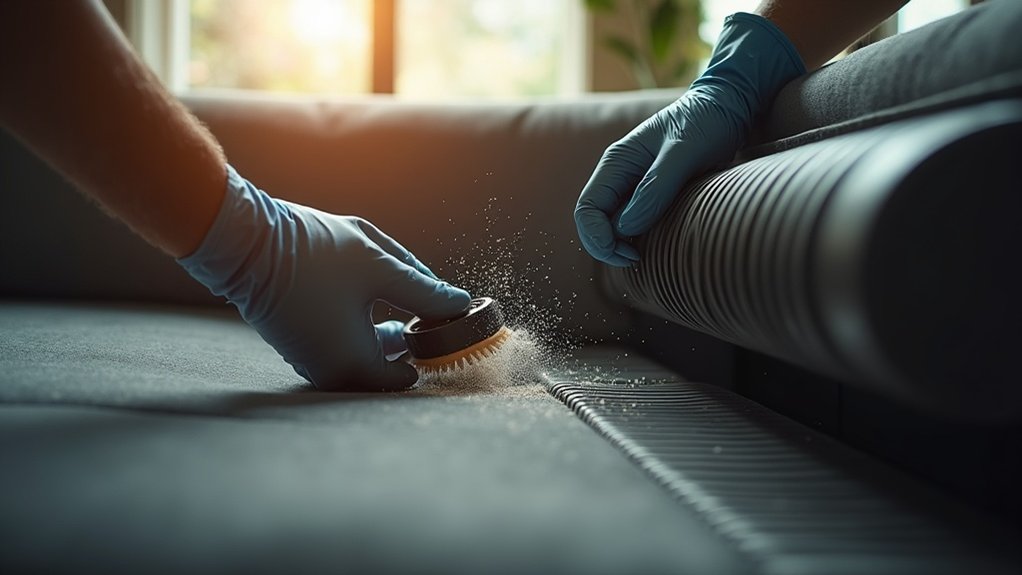
To clean vents behind furniture, start by moving the furniture for easy access. Turn off your HVAC system to avoid dust circulation. Use a vacuum with a brush attachment to remove dust and debris from vent openings. Wipe the vent surfaces with a microfiber cloth for a thorough clean. Keep an eye out for signs of buildup, and regularly check the area every few months. There’s more you can do to maintain air quality in your home.
Key Takeaways
- Move furniture away from the wall to access vents safely and easily.
- Turn off the HVAC system to prevent dust from circulating during cleaning.
- Use a vacuum cleaner with a brush attachment to clean vent openings and surrounding areas.
- Wipe down vent surfaces and the floor with a microfiber cloth for thorough cleaning.
- Regularly inspect and clean vents every 1-3 months, especially if you have pets.
Importance of Cleaning Vents Behind Furniture
When you neglect the vents behind your furniture, you may unknowingly compromise your home’s air quality and HVAC efficiency. Dust and allergens can accumulate in these hidden spots, leading to respiratory issues, especially for sensitive individuals.
By keeping these vents clean, you can greatly improve airflow and guarantee your HVAC system operates at peak performance, potentially reducing energy bills by up to 15%.
Keeping vents clean enhances airflow, ensures optimal HVAC performance, and can lower energy bills by as much as 15%.
Furthermore, regular maintenance helps prevent mold growth, which thrives in dark, damp areas.
Prioritizing the cleanliness of your vents not only enhances the air quality but also extends your HVAC’s lifespan, minimizing costly repairs down the line.
Tools and Materials Needed
To effectively clean the vents behind your furniture, you’ll need a few essential tools and materials. Gathering these items guarantees you tackle dust and debris efficiently and safely.
| Tool/Material | Purpose | Notes |
|---|---|---|
| Vacuum Cleaner | Removes dust and debris | Use with brush attachment |
| Microfiber Cloth | Access tight spaces | Great for corners |
| Screwdriver | Remove furniture or vent covers | Check furniture type |
| Flashlight | Illuminate dark areas | Helps identify vents |
| Protective Gear | Guarantees safety from dust and allergens | Gloves and mask recommended |
Step-by-Step Guide to Accessing Vents
Cleaning the vents behind your furniture involves a few straightforward steps that make the process efficient and effective.
Start by moving the furniture away from the wall, creating enough space to access the vents safely. Make certain the HVAC system is turned off to prevent dust and debris from circulating.
To clean the vents, first move furniture away from the wall and turn off the HVAC system to avoid dust circulation.
Carefully inspect the area behind the furniture for any visible accumulation. Use a vacuum cleaner with a brush attachment to clean both the vent openings and the surrounding area.
If needed, utilize a microfiber cloth to wipe down the vent surfaces and the floor behind the furniture for a thorough cleaning.
Cleaning Process for Vents
To start the cleaning process, carefully move your furniture away from the vents to guarantee you have enough space to work without damaging anything.
Next, turn off your HVAC system to stop dust from spreading while you clean.
With a vacuum and brush attachment, you can then tackle the dust and debris both inside the vents and in the surrounding areas.
Preparing for Cleaning
Before diving into the cleaning process, it’s essential to prepare the area around your vents effectively. Start by turning off your HVAC system to prevent dust from circulating and protect it during cleaning.
Carefully remove furniture to give yourself ample space, ensuring you don’t damage anything in the process. Next, grab your vacuum cleaner with a brush attachment to tackle dust and debris deep inside the vent openings.
After vacuuming, use a damp microfiber cloth to wipe down the surrounding area, capturing any residual dust. For thorough cleaning, consider a vent cleaning kit to reach tight corners behind furniture.
Techniques for Accessing Vents
While you might think accessing vents behind furniture is a challenging task, it can be straightforward with the right approach. Start by carefully removing the furniture to create space. Use a vacuum with a brush attachment to clean the vents and surrounding area.
| Step | Action |
|---|---|
| 1 | Carefully remove furniture |
| 2 | Use a vacuum to clean the vents |
| 3 | Employ a vent cleaning brush |
| 4 | Regularly check and clean vents |
This prevents dust from blowing and improves airflow. If possible, remove the vent cover to thoroughly clean it and the duct inside.
Tips for Maintaining Clean Vents
Maintaining clean vents is essential for ideal airflow and indoor air quality, and you can achieve this with a few simple strategies.
Regularly move furniture and vacuum around your vents to reduce dust buildup and enhance airflow. Implement a cleaning schedule every 1-3 months to keep vents clear of debris, especially if you have pets.
Use a microfiber cloth to wipe vent covers and surrounding surfaces, preventing dust accumulation. Monitor and replace air filters frequently to improve air quality.
Educate your household about keeping furniture away from vents to promote better airflow and avoid obstructions. Your efforts will make a significant difference!
Signs That Vents Need Attention
Recognizing when your vents need attention can help prevent larger issues down the road.
Keep an eye out for dust buildup around or inside vent grilles; this can reduce airflow and compromise indoor air quality. If you notice reduced airflow, it may signal that dust and debris are obstructing the ducts.
An increase in dust on furniture surfaces suggests ineffective air filtration. Musty odors during HVAC operation indicate trapped moisture or mold.
Finally, visible signs of mold or pests are serious health concerns, requiring immediate cleaning to guarantee your home’s air is safe and clean.
Don’t ignore these vital signs!
When to Seek Professional Help
If you spot mold growth or smell a musty odor coming from your vents, it’s time to call in professionals, as these issues can seriously impact your health.
Additionally, if you find extensive dust buildup that regular cleaning can’t tackle, specialized equipment from experts can guarantee a thorough job.
Finally, don’t hesitate to reach out for help if you encounter pest infestations around your vents; addressing these problems quickly is essential for maintaining a safe environment.
Mold or Pest Issues
When you notice musty odors, visible mold growth, or signs of pests around your air vents, it’s time to contemplate professional help. Ignoring these issues can severely impact your indoor air quality and exacerbate respiratory issues.
Here are three signs to watch for:
- Visible Mold: Any mold growth should be addressed immediately to prevent health risks.
- Pest Evidence: Droppings or unusual sounds indicate pests that require expert removal.
- Health Symptoms: If you or your family experience increased allergies, it’s essential to seek professional cleaning services to guarantee a safe environment.
Extensive Dust Buildup
Ignoring mold and pest issues can lead to more significant problems, such as extensive dust buildup behind your furniture.
If you notice significant dust accumulation that’s tough to reach, it’s time to think about professional help. Thorough cleaning is essential to keep your air vents clean and maintain good indoor air quality.
If you spot visible mold or experience persistent musty odors, don’t hesitate to call in experts. They use specialized equipment to tackle deep-seated dust and debris, ensuring a thorough clean.
Additional Considerations for Air Quality
Maintaining clean air vents, especially those tucked behind furniture, plays an essential role in ensuring high indoor air quality.
To improve air quality and keep your HVAC system running efficiently, consider these additional steps:
- Change air filters regularly to trap allergens like pet dander and dust.
- Schedule air duct cleaning at least once a year to remove deep-seated debris.
- Inspect and clean vents monthly, particularly in homes with pets, to prevent mold and musty odors.






